
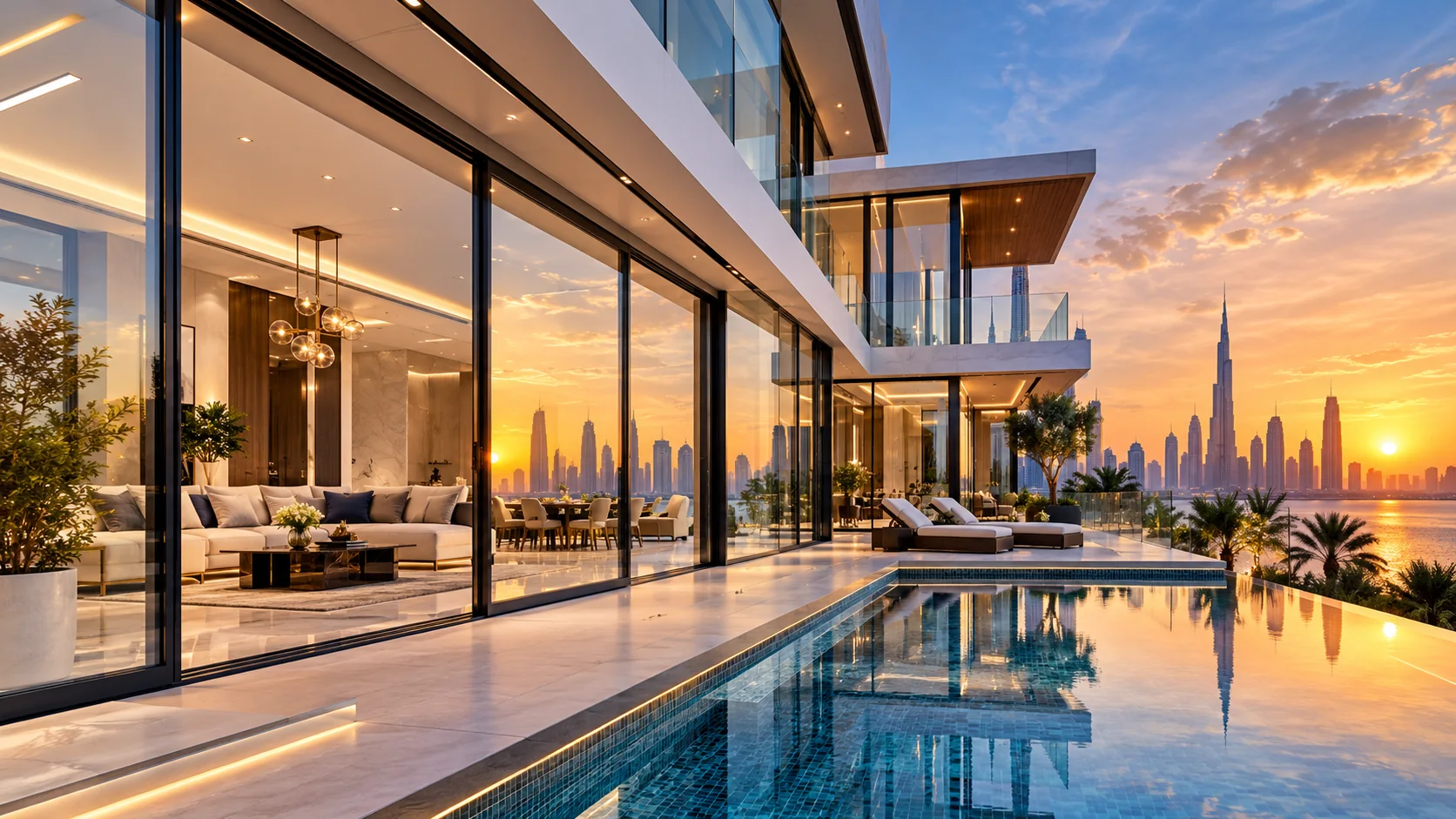
Architectural excellence | Dubai, UAE
Premium Architectural Glass Solutions in Dubai: Transforming Luxury Villas, Hotels and Commercial Spaces
Elevating luxury residences, hospitality environments, and commercial developments through sophisticated glass and aluminium solutions.
Glasser Technical Works Team · Published 21 October 2026 · 10 min read
Quick answer
Premium architectural glass combines the intended appearance with suitable safety, thermal and acoustic performance, precise installation and carefully coordinated aluminium detailing. In Dubai, the right solution depends on the building, its exposure and how each space is used—not on a universal glass thickness or price.
How architectural glass shapes exceptional Dubai spaces
Architectural glass does more than open a building to a view. It determines how daylight enters a room, how people move between spaces and how a façade responds to heat, weather and daily use. In a Dubai villa, expansive glazing can connect the living area with a terrace. In a hotel, carefully detailed glass can create an inviting reception without sacrificing separation. In a commercial office, transparent partitions can preserve visual openness while defining private rooms.
Premium glass solutions in Dubai begin with these practical requirements, not simply with the largest possible panel or the narrowest frame. A successful installation balances proportion, comfort, safety, maintenance and architectural intent. The glass, aluminium, seals, fixings and adjoining finishes must work together as a coordinated system.
Glasser UAE / Glasser Technical Works LLC is a Dubai glass and aluminium specialist. This guide helps villa owners, architects, designers, developers and procurement teams prepare a considered brief for architectural glazing UAE projects, from refined interiors to substantial commercial packages. It explains what to specify, what to check and what information supports a useful project discussion.
Premium glass solutions for luxury projects
Floor-to-ceiling glass windows
Expansive windows give villas and penthouses a strong connection to their surroundings. Panel proportions, opening arrangements and frame alignment should follow the elevations and room layout. For external glazing, the specification also needs to address solar exposure, thermal performance, wind loading and water management. Low-E coatings and insulated glass units may form part of the solution, but a large pane is not automatically an energy-efficient pane. Agree the required performance before selecting its appearance.
Luxury glass partitions
Glass partitions can define executive offices, boardrooms, hotel meeting spaces and premium residential interiors without closing off light. Choose transparent, patterned or privacy finishes according to how the room is used. Where speech privacy matters, review the complete enclosure: doors, perimeter seals, ceiling interfaces and service penetrations can influence the result as much as the glass. Slim aluminium framing should accommodate the required system rather than compromise it for a purely visual effect.
Bespoke mirrors and decorative glass
Custom mirrors introduce depth and reflected light into entrances, dressing rooms, bathrooms and hospitality interiors. Back-painted glass can create coordinated wall finishes and feature surfaces. Before fabrication, confirm edge treatments, socket cut-outs, substrate condition and fixing arrangements. Samples help designers assess colour and reflection under the actual lighting. In moisture-prone areas, backing protection, compatible adhesives and edge detailing deserve particular attention; a decorative finish still requires an appropriate installation method.
Architectural aluminium systems
Aluminium profiles define sightlines, opening operation and the relationship between glass and surrounding architecture. Section sizes, hardware, powder-coated or anodized finishes and drainage details should be selected as a system. Thermal breaks may be relevant for external windows and doors. Review finish samples beside stone, joinery and metalwork, and establish tolerances at adjoining surfaces. Matching a colour alone does not confirm that profiles, fixings or hardware are suitable for the intended application.
Glass for hotels and commercial developments
Reception areas, meeting rooms, retail interiors and showrooms each place different demands on glazing. High-traffic doors need suitable hardware and clear circulation. Meeting rooms may require acoustic separation and controllable privacy. Shopfronts need coordinated signage, security and cleaning access. Hospitality projects should consider guest comfort, impact risk and replacement logistics. Procurement schedules should distinguish these applications rather than assign one generic glass specification to an entire development.
Custom glass and aluminium applications
Bespoke architectural glazing starts with a clearly defined design and performance brief. Curved glass, feature entrances, balustrades and unusually large panels require attention to support conditions, manufacturability, transportation and safe installation. Coordinate the glass package with architects, consultants and contractors before dimensions become fixed. A specialist execution partner can identify practical interfaces and fabrication considerations, while project-specific engineering and approval responsibilities remain with the appointed design professionals.
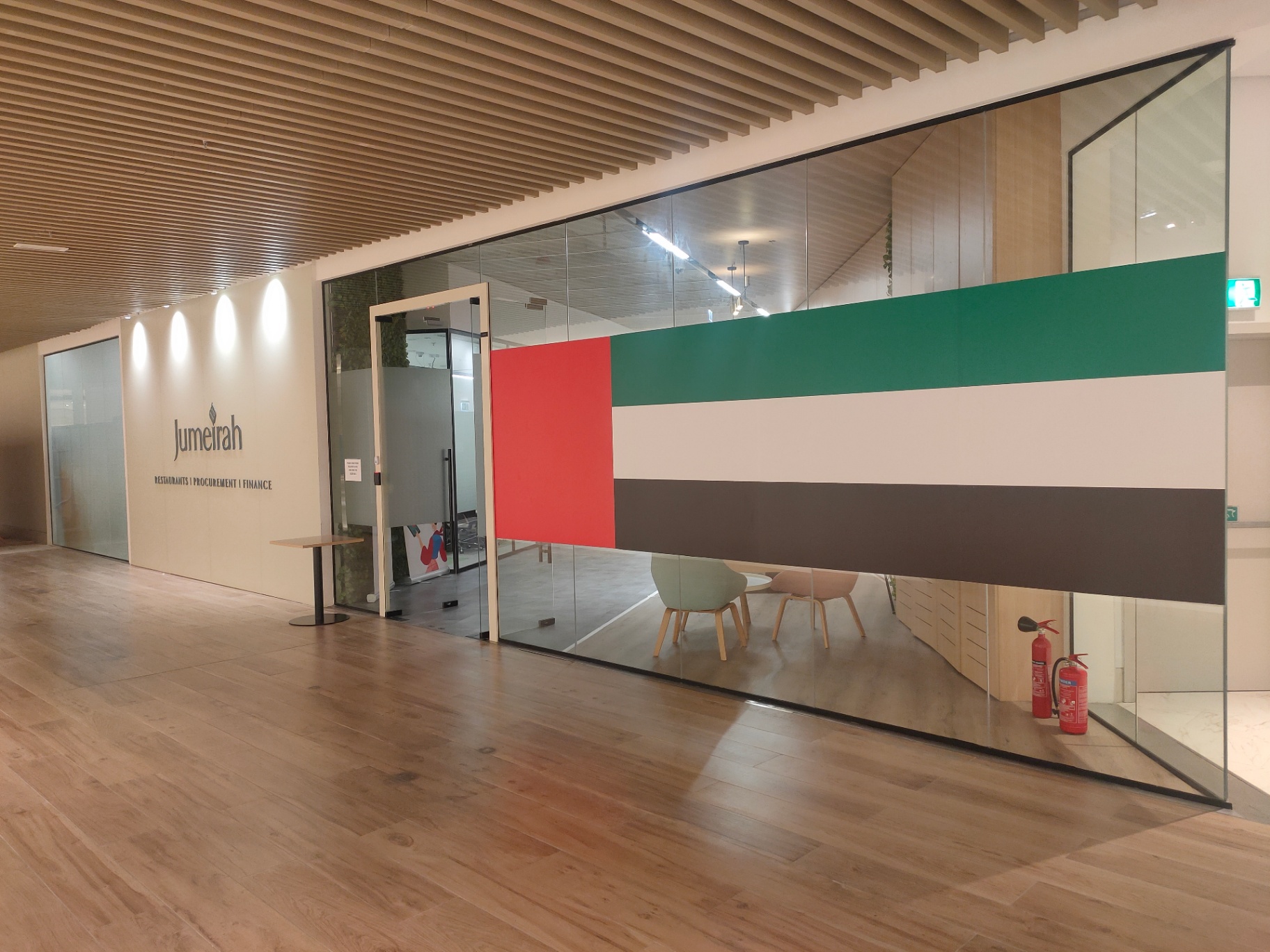


What defines a premium glass installation?
The distinction is often visible at the edges: consistent joints, aligned frames, carefully finished corners and interfaces that look deliberate. These details are the outcome of specification, measurement and coordination—not a substitute for them. Six considerations provide a useful review framework.
01 — Material suitability
Select glass, aluminium and hardware for the exposure, frequency of use and intended function. Request relevant product information and samples. A beautiful interior material may not suit an external or wet-area application.
02 — Glass specification and safety
Tempered, laminated, heat-strengthened and insulated glass have different roles; the terms are not interchangeable. Glass type, thickness, support conditions and applicable safety requirements must be determined for the actual application and relevant UAE regulations.
03 — Precision measurement
Confirm site dimensions, levels and finished openings before fabrication. Check whether floors, ceilings and adjacent cladding are complete. Recorded surveys and agreed tolerances reduce the risk of relying on architectural dimensions that no longer match site conditions.
04 — Profiles and finishes
Review aluminium sightlines, sections, corner joints and coating samples together. Hardware should suit panel dimensions and usage. Consistent finishes and well-resolved interfaces are more meaningful than an isolated claim of a premium profile.
05 — Weather sealing
For external installations, examine drainage, gasket continuity, sealant compatibility and connections to the building envelope. Glass alone does not create a watertight façade. The complete assembly and its interfaces need appropriate detailing and verification.
06 — Coordination and quality control
Agree shop drawings, material approvals, inspection points and handover requirements. Establish who is responsible for adjoining works, access equipment and protection. Review installed glazing before access is removed and document defects for resolution.
Applications across Dubai’s premium property market
Contemporary villas benefit from glazing that supports indoor-outdoor continuity while managing exposure and privacy. For luxury villa glass installation Dubai briefs, identify opening sizes, shading, terrace thresholds and cleaning access early. Locations such as Dubai Hills, Jumeirah and Palm Jumeirah can offer very different site conditions; none removes the need for a property-specific review.
High-end apartments and penthouses require special attention to transportation, lifting access and building-management restrictions. Replacement glass may need to match an existing façade system. Confirm the approved specification and any required permissions before changing external glazing, even when the visual intention appears modest.
Hospitality interiors call for durable, maintainable details across reception areas, bathrooms and guest-facing spaces. In corporate offices in Business Bay, DIFC or Dubai Marina, commercial glass partitions UAE specifications should reflect acoustic needs, door operation, privacy and existing ceiling services. These are contextual applications, not claims of named Glasser projects.
Retail showrooms need unobstructed visibility and workable entrances, while larger commercial developments need coordinated schedules, sequencing and interfaces across multiple trades. The same design language can run through different spaces, but the glass and aluminium specification should respond to each use rather than repeat a single solution everywhere.
What influences the cost of premium architectural glass?
There is no universal price for a premium glass installation in Dubai. Dimensions, quantity, glass make-up, coatings, framing, hardware and finish requirements all affect the package. Curved geometry, specialist edgework, unusual cut-outs and large-format handling can change both fabrication and installation requirements.
Access is another major variable. Ground-floor installation differs from lifting panels to a penthouse or working within an occupied hotel. Protection, working-hour restrictions, mock-ups, testing and coordination with other contractors should be identified before comparing quotations. An apparently lower total may exclude items that another contractor has included.
Ask for an itemized scope identifying the proposed system, glass specification, finish, hardware, installation allowances and exclusions. Clarify responsibilities for surveys, design coordination, approvals, lifting equipment, making good and handover. Compare offers against the same approved requirements, not only their totals. No figures in this guide should be interpreted as a quotation or guaranteed market rate.
Discussing your project with Glasser UAE
Glasser UAE provides a company-led point of contact for glass and aluminium project enquiries in Dubai. Architectural detailing, site measurement, workmanship and coordination are practical subjects to discuss with the team. The appropriate scope should be confirmed against your drawings, project specifications and intended use rather than assumed from a photograph.
For tailored architectural glass Dubai requirements, share the design intent alongside the technical brief. Identify the architect, consultant and main contractor where applicable, and agree the review and approval process. Glasser’s role as a specialist contractor and technical execution partner should be defined alongside—not confused with—the responsibilities of the appointed structural engineer or approving authority.
Early communication is particularly useful when glazing connects to stone floors, waterproofing, joinery or ceiling systems. Reviewing these interfaces before fabrication helps align finishes, access and sequencing. Confirm available systems, lead times and project-specific commitments directly with the team; this article does not promise a fixed programme, performance rating or approval.
Explore our aluminium works Dubai, glass façade solutions and office glass partitions to discuss the relevant scope.
What should you send for a project quotation?
Send plans, elevations and sections where available, together with approximate dimensions, quantities and the project location. Include a glass schedule or performance brief, preferred framing and finishes, door arrangements and any acoustic, thermal or safety requirements. Reference images are useful for appearance, but cannot replace dimensions or an approved specification.
Explain the site conditions: building type, floor level, occupancy, access restrictions and intended programme. Identify required mock-ups, testing, authority or consultant review and whether the enquiry includes supply only or complete installation. If details remain undecided, flag them clearly so the team can identify what needs confirmation before a firm quotation.
Frequently asked questions
What glass solutions are suitable for luxury villas in Dubai?
Depending on the design, villas may use expansive external glazing, glass doors, partitions, balustrades, shower enclosures and bespoke mirrors. External glazing needs project-specific thermal, structural and weather-performance requirements. Select the glass and framing with the appointed design team rather than assume a single specification suits every villa.
Which glass options are commonly used for premium commercial buildings?
Commercial projects may use insulated glazing for external façades, laminated or tempered safety glass where appropriate, acoustic partitions and decorative glass internally. The correct selection depends on building use, exposure, support conditions, acoustic targets and applicable requirements. Product names alone do not establish complete-system performance.
Can glass partitions be customized for luxury offices?
Partitions can be coordinated around room layouts, door configurations, frame finishes and privacy preferences. Acoustic requirements should be considered at the same time as appearance because doors, seals and ceiling interfaces affect separation. Confirm the available system, panel dimensions and project-specific options with Glasser UAE.
What factors influence the cost of a premium glass installation in Dubai?
Key factors include dimensions, quantity, glass specification, framing, hardware, finishes, access and installation complexity. Surveys, testing, lifting arrangements and coordination can also affect the scope. Request a project-specific quotation and compare inclusions and exclusions; there is no universal price for premium architectural glazing.
How do I select the right glass for a specific architectural application?
Start with the intended use, panel dimensions, support conditions and required safety, thermal or acoustic performance. Then review the complete system with the responsible consultant and specialist contractor. Thickness, coatings and glass treatment should follow the application and approved design, not appearance or cost alone.
Does Glasser UAE handle customized glass and aluminium requirements?
Glasser UAE accepts enquiries for tailored glass and aluminium works. Share drawings, intended applications and preferred finishes with the team to confirm the suitable scope and available solutions. Unusual geometry, large panels and specialist performance requirements need individual review and any necessary consultant coordination.
What information should I provide when requesting a project quotation?
Provide drawings or dimensions, quantities, project location, glass and aluminium preferences, performance requirements and the intended programme. Include site access restrictions, building use and whether installation is required. Flag undecided specifications and send reference images separately so design intent is not mistaken for an approved technical detail.
Planning a Premium Glass or Aluminium Project in Dubai?
From refined residential interiors to sophisticated commercial environments, discuss your project requirements with Glasser UAE and explore a solution tailored to your architectural vision.